Welcome to the Foodborne Disease website. The sources of pathogens responsible for causing foodborne illnesses are pervasive. Food and its derivatives will invariably harbor a small concentration of pathogenic agents. When existing in minor proportions, these detrimental microorganisms do not give rise to any concerns. However, upon surpassing a particular threshold of contamination, they hold the capability to initiate sickness and potentially lead to fatal outcomes..

Showing posts with label health. Show all posts

Wednesday, January 26, 2011

Aflatoxins effects on Health

Aflatoxins effects on Health
At high enough exposure levels, alflatoxins can cause acute toxicity, and potentially death in mammals, birds and fish as well as in humans.

The liver is the principal organ affected it high levels of aflatoxins have also been found in the lungs, kidneys, brains and hearts of individuals dying of acute aflatoxicosis.

Acute necrosis and cirrhosis of the liver is typical , ailing with hemorrhaging and oedema.

LD50 (lethal dose) values for animals vary between 0.5 and 10 mg/kg bodyweight.

Chronic toxicity is probably more important from a food safety point of view, certainly in more developed regions of the world. Aflatoxin B1 is a very potent carcinogen and a mutagen in many animals and therefore potentially in humans, and the liver is again the main target organ.

Ingestion of low levels over a long period has been implicated in primary liver cancer, chronic hepatitis, jaundice, cirrhoses and impaired nutrient conversion.

Aflatoxins may also play a role in other conditions, such as Reye’s syndromes and kwashiorkor (a childhood condition linked to malnutrition).

Less is known about the chronic toxicity of aflatoxin G1 and M1, but these are also thought to be carcinogens, though probably a little less potent than B1.

Little is known about the level of dietary exposure to aflatoxins necessary to affect health, especially in humans, and diagnosis of chronic toxicity is very difficult.

It is generally agreed that the best approach is to minimize the levels in all foods as far as is technically possible and to assume that any dietary exposure is undesirable.’
Aflatoxins effects on Health

Saturday, December 02, 2006

Health effects of E. coli O157:H7

Health effects of E. coli O157:H7
E. coli O157:H7 is one of hundreds of strains of the bacterium E. coli. Although most strains are harmless and live in the intestines of healthy humans and animals, this strain produces a powerful toxin and can cause severe illness.

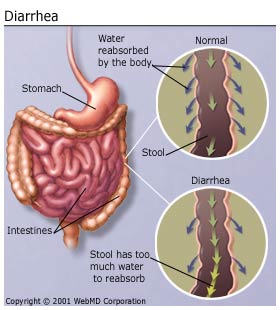
Infection often causes severe bloody diarrhea and abdominal cramps; sometimes the infection causes non-bloody diarrhea. Frequently, no fever is present. It should be noted that these symptoms are common to a variety of diseases, and may be caused by sources other than contaminated drinking water.

In some people, particularly children under 5 years of age and the elderly, the infection can also cause a complication called hemolytic uremic syndrome, in which the red blood cells are destroyed and the kidneys fail. About 2%-7% of infections lead to this complication.

In the United States, hemolytic uremic syndrome is the principal cause of acute kidney failure in children, and most cases of hemolytic uremic syndrome are caused by E. coli O157:H7. Hemolytic uremic syndrome is a life-threatening condition usually treated in an intensive care unit. Blood transfusions and kidney dialysis are often required. With intensive care, the death rate for hemolytic uremic syndrome is 3%-5%.
Health effects of E. coli O157:H7

The Most Popular Posts

Other interesting articles