Welcome to the Foodborne Disease website. The sources of pathogens responsible for causing foodborne illnesses are pervasive. Food and its derivatives will invariably harbor a small concentration of pathogenic agents. When existing in minor proportions, these detrimental microorganisms do not give rise to any concerns. However, upon surpassing a particular threshold of contamination, they hold the capability to initiate sickness and potentially lead to fatal outcomes..

Showing posts with label E. coli. Show all posts

Monday, April 30, 2018

Symptoms of E. coli O157:H7 infection

E. coli O157:H7 was given to a deadly strain of chemical compounds found on the bacterium’s surface. Sources of human infection have included, among others, poorly cooked meat (especially hamburger), apple juice, water (including water parks), vegetables and fruit from salad bars, and milk products such as yogurt and unpasteurized milk.

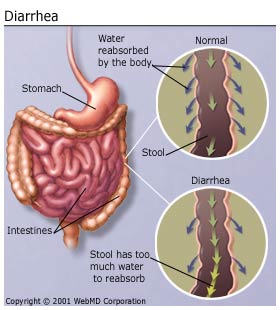
Infection often causes severe bloody diarrhea and abdominal cramps; sometimes the infection causes non-bloody diarrhea. Frequently, no fever is present. It should be noted that these symptoms are common to a variety of diseases, and may be caused by sources other than contaminated drinking water.

Patients initially complain of symptoms similar to viral gastroenteritis abdominal cramping with significant abdominal pain and tenderness; flatulence; elevated temperatures; and voluminous, water diarrhea.

The diarrhea eventually becomes bloody; 91% of patients report bloody stools at some time during the course of the disease. Symptoms of infection with E. coli O157:H7 usually resolve within 8 days. Those whose primary symptom is diarrhea usually recover completely. Those with more serious infections may suffer kidney impairment or failure and the complications associate with it.
Symptoms of E. coli O157:H7 infection

Sunday, December 09, 2012

E. coli infection

E. coli is a common type of bacteria that can get into food. Its medical term Escherichia coli. It is the most common gram-negative human pathogen. E. coli is among the most common and important human bacterial pathogens, causing more than 90% of all urinary tract infections and many cases of diarrheal illness worldwide.

The strange thing about these bacteria — and lots of other bacteria — is that they're not always harmful to human. E. coli normally lives inside the intestines, where it helps to body break down and digest the food. 

Unfortunately, certain types (called strains) of E. coli can get from the intestines into the blood. This is a rare illness, but it can cause a very serious infection.

The bacterium is the most frequent cause of urinary tract infections and is commonly found in wounds. 

Someone who has E. coli infection may have these symptoms: fever and chills bad stomach cramps and belly pain vomiting diarrhea, sometimes with blood in it.

E. coli blood poisoning can be rapidly fatal as a result of shock because of the action of an endotoxin released by the bacteria.

E. coli is undoubtedly a great opportunist and frequently causes pneumonia and sepsis in immune-compromised hosts and meningitis and sepsis in newborns. Beef can contain E. coli because the bacteria often infect cattle. It can be in meat that comes from cattle.

Most E. coli infections come from:
*Eating undercooked ground beef (the inside is pink)
*Drinking contaminated (impure) water
*Drinking unpasteurized (raw) milk
*Working with cattle

The most common way to get this infection is by eating contaminated food. Human can be infected with the E. coli germ if they don't use a high temperature to cook beef, or if don't cook it long enough. When human eat undercooked beef, the germs go into stomach and intestines.

Contamination of wounds with E. coli may lead to wound infection. Such contamination may be endogenous, from the fecal flora, or exogenous, from water or soil.
E. coli infection

Tuesday, August 23, 2011

E coli

Escherichia coli is a member of the family Enterobacteriaceae and is character used by possession of the enzyme Beta galactosidase and Beta glucuronidase.

It is gram negative bacteria and is easily grown an manipulated, it has become the best studied prokaryotic model organism.

Escherichia coli is a bacterium that lives in human gut. It is one of the simplest and bets understood living things, yet remarkably sophisticated.

It is cells are rod shaped, about 2.5 micrometers long and 0.5 micrometers in diameter.

E. coli has played a vital role in development of recombinant DNA technology.

E. coli lives a life of luxury in the lower intestines of warm blooded animals, including humans.

Once expelled, it lives a life of penury and hazard in water sediment and soil. It is also found in sewage, treated effluents, natural water subject to fecal contamination whether from humans, wild animas or agricultural activity.

Although most of E. coli do not cause gastrointestinal illness, certain groups of E. coli can cause life threatening diarrhea and severe sequence or disability. Some strains of E coli , such as enterohemorrhagic O157:H7, have a demonstrated pathogenicity to humans.

E. coli infections are typically caused by Escherichia coli O157:H7, the most powerful of hundred of strains of the bacterium Escherichia coli.

E. coli O157:H7 is a leading suspect when food borne illness occurs.
E coli

Saturday, December 02, 2006

Health effects of E. coli O157:H7

Health effects of E. coli O157:H7
E. coli O157:H7 is one of hundreds of strains of the bacterium E. coli. Although most strains are harmless and live in the intestines of healthy humans and animals, this strain produces a powerful toxin and can cause severe illness.

Infection often causes severe bloody diarrhea and abdominal cramps; sometimes the infection causes non-bloody diarrhea. Frequently, no fever is present. It should be noted that these symptoms are common to a variety of diseases, and may be caused by sources other than contaminated drinking water.

In some people, particularly children under 5 years of age and the elderly, the infection can also cause a complication called hemolytic uremic syndrome, in which the red blood cells are destroyed and the kidneys fail. About 2%-7% of infections lead to this complication.

In the United States, hemolytic uremic syndrome is the principal cause of acute kidney failure in children, and most cases of hemolytic uremic syndrome are caused by E. coli O157:H7. Hemolytic uremic syndrome is a life-threatening condition usually treated in an intensive care unit. Blood transfusions and kidney dialysis are often required. With intensive care, the death rate for hemolytic uremic syndrome is 3%-5%.
Health effects of E. coli O157:H7

The Most Popular Posts

Other interesting articles