Welcome to the Foodborne Disease website. The sources of pathogens responsible for causing foodborne illnesses are pervasive. Food and its derivatives will invariably harbor a small concentration of pathogenic agents. When existing in minor proportions, these detrimental microorganisms do not give rise to any concerns. However, upon surpassing a particular threshold of contamination, they hold the capability to initiate sickness and potentially lead to fatal outcomes..

Showing posts with label enterotoxin. Show all posts

Saturday, August 13, 2022

Staphylococcal enterotoxins

Staphylococcus aureus (S. aureus) is a Gram-positive bacterium that is carried by about one third of the general population and is responsible for common and serious diseases. It is a major human pathogen responsible for a wide range of infections, including skin and soft tissue infections, bacteremia, pneumonia, and several toxin-mediated diseases.

Staphylococcal food poisoning is an intoxication that results from the consumption of foods containing sufficient amounts of one (or more) preformed enterotoxin. Staphylococcal enterotoxins are a good example of superantigens and are the commonest cause of food poisoning. These small secreted proteins combine superantigenic and emetic activities. They are resistant to environmental conditions that easily destroy the enterotoxin-producing strain.

Staphylococcal enterotoxins are members of a family of more than 20 different staphylococcal and streptococcal exotoxins that are functionally related and share sequence homology. The S. aureus enterotoxins are potent gastrointestinal exotoxins synthesized by S. aureus throughout the logarithmic phase of growth or during the transition from the exponential to the stationary phase

These bacterial proteins are known to be pyrogenic and are connected to significant human diseases that include food poisoning and toxic shock syndrome.

Staphylococcal enterotoxin B is one of the most potent bacterial superantigens that exerts profound toxic effects upon the immune system. It is associated with food poisoning, nonmenstrual toxic shock, atopic dermatitis, asthma, and nasal polyps in humans. Typically, food

poisoning due to Staphylococcal enterotoxin B occurs in clusters because of a common food source (in settings such as a church picnic, eating contaminated food). Staphylococcal enterotoxin B has also been produced by some countries as a biological weapon. This toxin can disable people who are exposed to it for several weeks, but it is rarely deadly.

Symptoms of Staphylococcal food poisoning have a rapid onset (2–8 h), and include nausea, violent vomiting, abdominal cramping, with or without diarrhea. The disease is usually self-limiting and typically resolves within 24–48 h after onset.
Staphylococcal enterotoxins

Saturday, December 11, 2021

Clostridium perfringens enterotoxin

Clostridia produce the highest number of toxins of any type of bacteria. Among Clostridium species, Clostridium perfringens is the largest toxin producer and also the most widespread, being found as part of the microbiota of animals and humans and in the soil.

Clostridium perfringens type A is a spore forming, toxin producing bacterium first described by the American bacteriologist, Welch. This bacterium is a gram-positive anaerobic bacillus that is classified into five types based on the production of four major toxins (alpha, beta, epsilon, and iota). In addition to the major toxins, it can produce more than 15 other known toxins. Some C. perfringens strains produce another important toxin named Clostridium perfringens enterotoxin (CPE).

C. perfringens is a preeminent pathogen of humans and livestock, causing both histotoxic diseases and illnesses originating in the intestines, namely enteritis or enterotoxemia (where toxins produced in the intestine are absorbed into the circulation and then damage organs such as the brain).

CPE production, which is responsible for the diarrhea symptoms of diseases caused by cpe-positive type A strains, is sporulation-associated. Intact cpe genes can also be found in some type C, D and E strains.

The enterotoxin gene (CPE) is located on either the chromosome (for most C. perfringens type A food poisoning strains) or large conjugative plasmids (for the remaining type A food poisoning and most, if not all, other CPE-producing strains).

C. perfringens type A cannot only be found in soil, but also isolated from water, dust, sediments and raw and processed food commodities.

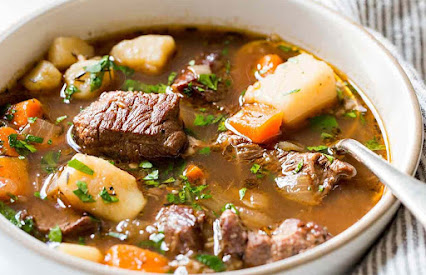
Meat and meat products such as soups and stews, are the most common vehicles of C. perfringens type A food poisoning, Contamination of meat by the intestinal contents of slaughtered animals may serve as an important source of this pathogen to food supply.
Clostridium perfringens enterotoxin

Wednesday, May 08, 2013

Enterotoxin of Shigella

Shigella grows optimally at pH 4.5, but survives in a pH range of 2 to 5, permitting easy transit of these bacteria through the stomach.

Shigella strains produce at least two enterotoxins including a chromosome encoded Shigella enterotoxin 1 and a large plasmid associate Shigella enterotoxin 2.

Enterotoxins are bacterial products that act on the mucosal epithelium of the intestine, causing fluid secretion and profuse watery diarrhea. Normally they are heat stable and a low of molecular weight and water soluble.

Shigella enterotoxin 1 is chromosomally encoded, iron dependent toxin of 55 kDa that is primarily expressed by S. flexnery while encoded Shigella enterotoxin 2 is a plasmid-encoded protein of 63 kDa.

Shigellae caused bacillary dysentery. Ingested bacilli may infect villi of large intestine and multiply inside them.

Inflammatory reaction results in epithelial necrotic patch which later on become transverse superficial ulcers. 

Transmission is by fecal-oral route, and stubborn reservoirs include day care centers, urban ghettos and rural village in developing countries.
Enterotoxin of Shigella

Tuesday, September 16, 2008

Shigella as a Pathogen

Shigella as a Pathogen
Shigellosis, or bacillary dysentery, as it is commonly known, is caused by bacteria of the genus Shigella (S. dysenteriae, S. flexneri, S. boydii and S. sonnei). The normal habitat for Shigellae is the intestinal tract of humans and other primates. They are rarely found in other animals. The main source of Shigellae involved in outbreaks is asymptomatic carriers or persons recovering from disease. Shigellae may persist in the intestinal tract for month.

Symptoms of shigellosis, after an incubation period of 1-7 days (usually less than 4 days), include diarrhea, abdominal pain, fever, and vomiting. The severity of the disease may vary from very mild to severe diarrhea with bloody stools, mucus secretion, and dehydration. Generally foodborne shigellosis is characterized by a high attack rate common source epidemiology, and short incubation periods of 7 – 36 hours. Symptoms usually persist for 3 – 14 days. Frequently, an asymptomatic carrier state may develop during convalescence, lasting from a few days to several months. Human volunteer studies indicate that ingestion of as few as 1 – 100 organisms can induce illness.

The disease is caused by invasion of the intestinal mucosa. An enterotoxin, classically referred to a Shiga toxin, may be produced by S. dysenteriae and possibly by S. flexneri.
Shigella as a Pathogen

The Most Popular Posts

Other interesting articles