Welcome to the Foodborne Disease website. The sources of pathogens responsible for causing foodborne illnesses are pervasive. Food and its derivatives will invariably harbor a small concentration of pathogenic agents. When existing in minor proportions, these detrimental microorganisms do not give rise to any concerns. However, upon surpassing a particular threshold of contamination, they hold the capability to initiate sickness and potentially lead to fatal outcomes..

Showing posts with label Clostridium perfringens. Show all posts

Friday, June 20, 2025

Clostridium perfringens: Understanding and Managing Gastrointestinal Infections

Gastrointestinal infections caused by Clostridium perfringens, termed enterotoxemias, exhibit a significant impact across various mammalian species, underlining the ubiquitous nature of this bacterium. Recent studies elucidate the mechanisms by which toxins produced in the intestines permeate the bloodstream, elucidating the pathophysiology of C. perfringens-induced food poisoning.

Individuals affected by C. perfringens typically experience a constellation of symptoms, including diarrhea and stomach cramps, distinguishing this illness from others characterized by vomiting. The latest research suggests that the severity and duration of symptoms may vary depending on the strain of C. perfringens involved, highlighting the need for strain-specific therapeutic strategies.

Symptoms of C. perfringens food poisoning typically manifest within 6 to 24 hours after consumption of contaminated food, catching individuals off guard with their sudden onset. However, recent epidemiological data indicate a rising trend in the incidence of prolonged symptoms, necessitating vigilant monitoring and follow-up care for affected individuals.

Effective management of C. perfringens-induced food poisoning revolves around maintaining adequate hydration. Diarrhea, a hallmark symptom of the infection, significantly increases the risk of dehydration, emphasizing the importance of timely fluid replacement therapy. Novel approaches, such as oral rehydration solutions tailored to address electrolyte imbalances, offer promising avenues for improving patient outcomes and expediting recovery from the illness.

In conclusion, a comprehensive understanding of Clostridium perfringens and its associated gastrointestinal infections is essential for effective management and prevention strategies. Continued research efforts aimed at elucidating the pathogenesis and identifying novel therapeutic targets are crucial for mitigating the burden of C. perfringens-induced enterotoxemias on public health.
Clostridium perfringens: Understanding and Managing Gastrointestinal Infections

Tuesday, May 20, 2025

Clostridium perfringens and Food Safety: Understanding the Risks

Clostridium perfringens, a Gram-positive spore-forming bacillus, is a notorious culprit behind acute gastrointestinal infections in humans. From mild diarrhea to severe necrotizing enterocolitis and myonecrosis, its impact on health can be significant.

A concerning aspect is its prevalence in a wide range of foods. Meat and poultry products, gravies, and other dishes commonly prepared in bulk are all susceptible to C. perfringens contamination. These foods, often cooked in large quantities for events and gatherings, provide an ideal environment for bacterial growth when not stored properly, particularly at unsafe temperatures.

The risk amplifies in environments where food is extensively handled and served, such as hospitals, school cafeterias, prisons, and nursing homes. These settings become fertile grounds for outbreaks due to the potential mishandling of food and inadequate temperature control during storage.

Moreover, events featuring catered meals pose an elevated risk. Prolonged storage and transportation of large quantities of food increase the likelihood of C. perfringens contamination if proper food safety measures are not strictly adhered to.

Given the severity of gastrointestinal infections associated with C. perfringens and its pervasive presence in various foods, strict adherence to food safety protocols is paramount. Awareness among food handlers and consumers regarding proper food handling, storage, and temperature control is crucial in mitigating the risk of outbreaks and ensuring public health safety.
Clostridium perfringens and Food Safety: Understanding the Risks

Saturday, April 20, 2024

Clostridium perfringens: Understanding a Common Food Poisoning Culprit

Clostridium perfringens, a Gram-positive, spore-forming anaerobic bacterium, resides naturally in the intestines of both humans and animals, highlighting its potential to infiltrate food supplies. Its prevalence in these environments underscores its ability to contaminate food sources and cause foodborne illness.

Unlike many bacteria, C. perfringens exhibits remarkable resilience. It forms spores, inactive forms of the bacterium, enabling survival in adverse conditions like heat and dryness. These spores persist even during cooking, making them impervious to standard culinary precautions. Consequently, improper food storage, particularly in the temperature danger zone (between 40°F and 140°F), provides an ideal environment for these spores to transform into active bacteria and multiply within food.

Upon ingestion of contaminated food, C. perfringens can produce toxins leading to symptoms such as diarrhea. This bacterium's ability to thrive in the absence of oxygen exacerbates its potential for foodborne outbreaks, especially in settings where food handling and storage practices are suboptimal.

Recent research has also shed light on the evolving understanding of C. perfringens and its impact on public health. Advances in molecular techniques have facilitated more accurate detection and monitoring of this bacterium in food processing environments, aiding in the prevention and control of foodborne outbreaks.

In conclusion, recognizing the characteristics and resilience of C. perfringens is crucial for implementing effective food safety measures. Improved understanding and vigilance are essential to mitigate the risk of food poisoning associated with this common bacterium.
Clostridium perfringens: Understanding a Common Food Poisoning Culprit

Wednesday, November 16, 2022

Clostridium perfringens type A food poisoning

Clostridium perfringens food poisoning is usually a mild clostridial infection. Clostridium perfringens is widely distributed in feces, soil, air, and water.

Clostridium perfringens mostly can be found on raw meat and poultry, and in the intestines of animals. Contaminated meat has caused many outbreaks. Because the spores of some strains are resistant to temperatures as high as 100°C for more than l h, their presence in foods may be unavoidable.

Once inside the gastrointestinal tract, Clostridium perfringens produces an enterotoxin that acts on the small bowel. Clostridium perfringens types A, C, and D produce an enterotoxin that is implicated in the pathogenesis of disease caused by this organism.

Only Clostridium perfringens type A has been definitively linked to this food poisoning syndrome. Clostridium perfringens type A is a significant cause of foodborne illness in Western countries because of its spore-forming ability, rapid growth, and ability to produce an enterotoxin.

Clostridium perfringens type A strains producing alpha-toxin encoded by the cpa gene, also known as phospholipase C, encoded by the plc gene, that concomitantly produce the Clostridium perfringens enterotoxin (CPE).

Production and release of CPE in the gastrointestinal tract causes diarrhea and has been associated with spore formation and lysis of the mother cell in the gut.

Illness typically occurs 8-15 h after ingestion of the contaminated food. The symptoms, which include intense abdominal cramps, gas, and diarrhea (nausea and vomiting are rare), have been attributed to a protein enterotoxin produced during sporulation of the organism in the intestine.
Clostridium perfringens type A food poisoning

Saturday, December 11, 2021

Clostridium perfringens enterotoxin

Clostridia produce the highest number of toxins of any type of bacteria. Among Clostridium species, Clostridium perfringens is the largest toxin producer and also the most widespread, being found as part of the microbiota of animals and humans and in the soil.

Clostridium perfringens type A is a spore forming, toxin producing bacterium first described by the American bacteriologist, Welch. This bacterium is a gram-positive anaerobic bacillus that is classified into five types based on the production of four major toxins (alpha, beta, epsilon, and iota). In addition to the major toxins, it can produce more than 15 other known toxins. Some C. perfringens strains produce another important toxin named Clostridium perfringens enterotoxin (CPE).

C. perfringens is a preeminent pathogen of humans and livestock, causing both histotoxic diseases and illnesses originating in the intestines, namely enteritis or enterotoxemia (where toxins produced in the intestine are absorbed into the circulation and then damage organs such as the brain).

CPE production, which is responsible for the diarrhea symptoms of diseases caused by cpe-positive type A strains, is sporulation-associated. Intact cpe genes can also be found in some type C, D and E strains.

The enterotoxin gene (CPE) is located on either the chromosome (for most C. perfringens type A food poisoning strains) or large conjugative plasmids (for the remaining type A food poisoning and most, if not all, other CPE-producing strains).

C. perfringens type A cannot only be found in soil, but also isolated from water, dust, sediments and raw and processed food commodities.

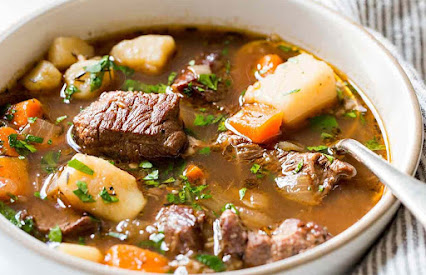
Meat and meat products such as soups and stews, are the most common vehicles of C. perfringens type A food poisoning, Contamination of meat by the intestinal contents of slaughtered animals may serve as an important source of this pathogen to food supply.
Clostridium perfringens enterotoxin

Thursday, May 06, 2021

Gram-positive anaerobic bacillus of Clostridium perfringens

Clostridia produce the highest number of toxins of any type of bacteria. Among Clostridium species, Clostridium perfringens is the largest toxin producer and also the most widespread, being found as part of the microbiota of animals and humans and in the soil.

Clostridium perfringens is an important anaerobic pathogen causing food-borne gastrointestinal (GI) diseases in humans and animals, often referred to as perfringens food poisoning. Humans become infected by transmission of the bacteria from cooked dishes, especially meat dishes. Contamination of the meat by the intestinal contents of slaughtered animals might serve as an important source of this pathogen to the food supply.

C. perfringens develops easily in complex peptone media but much less in defined media. Under optimal conditions it can double in 7 min.

This bacterium is a gram-positive anaerobic bacillus that is classified into five types according to the production of four major toxins: alpha (α), beta (β), epsilon (ε) and iota (ι).

In addition to the major toxins, it can produce more than 15 other known toxins. Some of these additional virulence factors, including enterotoxin, necrotic enteritis B-like toxin (NetB) and beta-2 toxin, have received more attention than others due to their role in the pathogenesis of C. perfringens-associated disease (CPAD) in humans and animals.

While outbreaks of C. perfringens are common, they do not become major headlines because the typical symptoms of the illness are mild, and deaths are extremely rare.

C. perfringens is a highly ubiquitous bacterium widely distributed in all types of environment (soil, sediments, sewage, slurry, carcasses, dust, the surfaces of plants, etc.). Healthy humans and animals can be carriers of C. perfringens in their digestive tubes.
Gram-positive anaerobic bacillus of Clostridium perfringens

Tuesday, March 01, 2011

Background of Clostridium perfringes

Clostridium perfringens is an aerobic bacteria present in the environment and in the intestines of both humans and domestic and feral animals. Clostridium perfringens was first described by Welch and Nuttall in 1892 after they had isolated the organism from a cadaver. 

Since the bacteria are so prevalent, most foods are contaminated with, especially animal proteins such as meat. However, it takes millions of bacterial cells to cause illness. Bacterial cells double every twenty to thirty minutes so a single bacterium can reach over a trillion cells in twenty four hours if the conditions are favorable. 

The small amounts of C. perfringens in foods do not cause any problems unless if it is prepared too long before serving. Outbreaks occur most commonly in institutional setting like hospitals, school, cafeteria, prisons and nursing homes where food is prepared several hours before serving. 

Clostridium perfringens is group into five types based on the production and secretion of four major toxin. Clostridium perfringens produces a number of other virulence enhancing toxins and hydrolytic enzymes. The most significant of these is probably enterotoxin. 

In food poisoning outbreaks, demonstration of hundred of thousands more organisms per gram is a suspect food supports a diagnosis of perfringens poisoning when substantiated by clinical and epidemiological evidence. 

Clostridium perfringens type A causes one of the most common food borne illness in the United States. The characteristic diarrhea and abdominal cramps associated with C. perfringens food poisoning are caused by a protein enterotoxin, Clostridium perfringens enterotoxin, CPE (2-4). 
Background of Clostridium perfringes

Sunday, June 29, 2008

Foodborne illness bacteria: Clostridium perfringes

Foodborne illness bacteria: Clostridium perfringens Clostridium perfringens contamination Clostridium perfringens (both vegetative cells and spores) is found in soil, sewage, manure, water, and dust. It has been found in the intestinal tract of healthy humans and animals. 

Many raw foods, particularly meats and vegetables, are likely to be contaminated with Clostridium perfringens when they reach food preparation areas. Outbreaks of illness usually involve foods high in protein. Clostridium has a requirement for 12 to 13 amino acids.) The foods include: meats, poultry, soups, gravies, sauces, stews, and casseroles. 

When food is cooked, the vegetative cells are destroyed. However, spores survive if protein-rich foods, such as roast beef, turkey, gravies,, and sauces are allowed to cool slowly and remain at temperatures that allow outgrowth of the surviving spores, vegetative cells will multiply rapidly to large numbers in the food and create a significant hazard. 

Foodborne illness 
Foodborne illness due to Clostridium perfringens usually occurs to 24 hours after ingestion. The illness is caused by ingestion of a large number of vegetative cells. When the vegetative cells reach the intestine, they form spores and release an enterotoxin that causes diarrhea and severe abdominal pain. Nausea is uncommon; fever and vomiting are unusual. 

Fatalities can occur in the very young and elderly. The infective dose is a cell population of 500,000 cells or more per gram of food. This number of cells can form rapidly in foods because Clostridium perfringens has a very rapid generation time and can double ion number every 7 minutes at 42 C. Clostridium perfringes grows at temperatures between 15 C and 53 C. 
Foodborne illness bacteria: Clostridium perfringens

The Most Popular Posts

Other interesting articles